
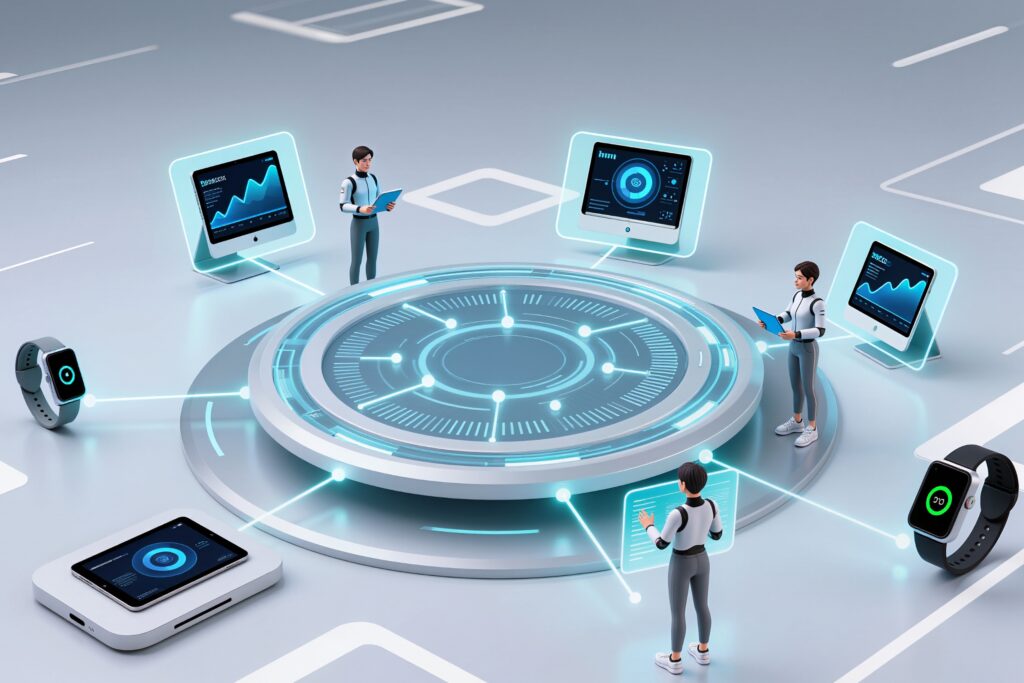
Project coordination has always required balancing structure with adaptability. As work becomes more distributed and interconnected, traditional coordination methods often struggle to provide the visibility and responsiveness that modern teams expect. Artificial intelligence is increasingly influencing how coordination is approached, offering new ways to interpret information, anticipate challenges, and support alignment across evolving workflows.
Rather than functioning as a standalone solution, AI reshapes coordination by enhancing how information flows between people, systems, and decisions. Intelligent capabilities support awareness, reduce friction, and help teams respond more effectively to change. This transformation reflects a broader shift toward data-informed collaboration rather than rigid oversight.
Understanding how artificial intelligence alters coordination practices is essential for organizations navigating complex operational environments. This article explores the evolving role of AI in project coordination, focusing on clarity, balance, and practical impact. It offers an informed perspective on how intelligent systems influence collaboration while reinforcing the importance of human judgment and accountability.
From Manual Oversight to Adaptive Awareness
Traditional coordination relies heavily on manual updates, scheduled check-ins, and static planning documents. While these methods provide structure, they often lag behind real conditions. Artificial intelligence introduces adaptive awareness by continuously interpreting activity and progress across systems.
This awareness allows teams to identify shifts earlier. Changes in workload, dependencies, or timelines are surfaced through patterns rather than delayed reports. As a result, coordination becomes proactive instead of reactive, supporting smoother transitions and more confident adjustments.
Adaptive awareness does not remove oversight responsibilities. Instead, it enhances them by providing timely context. Coordinators remain decision-makers, supported by insights that reflect current realities rather than assumptions.
Enhancing Information Flow Across Teams
Information flow is central to effective coordination. When updates are fragmented or delayed, misalignment increases. AI-supported environments improve information flow by consolidating data and presenting it in coherent, accessible formats.
Intelligent systems help filter relevance, ensuring that individuals receive contextually meaningful information. This reduces noise and allows teams to focus on priorities without constant clarification. Improved information flow supports alignment across roles and reduces dependency on manual communication.
Over time, consistent clarity strengthens collaboration. Teams develop shared understanding more quickly, enabling coordination to function as an ongoing process rather than a corrective effort.
Supporting Context-Aware Decision-Making
Coordination decisions are rarely isolated. They depend on timing, capacity, and interdependencies. Artificial intelligence supports context-aware decision-making by analyzing multiple variables simultaneously.
By recognizing patterns across tasks and timelines, AI systems offer insights that inform adjustments before issues escalate. These insights support coordinators in evaluating options with greater confidence and precision.
Context-aware support does not dictate decisions. Instead, it expands perspective. Coordinators remain responsible for judgment, while intelligent systems enhance situational awareness and reduce uncertainty.
Reducing Friction in Distributed Work Environments
Distributed teams face unique coordination challenges, including time zone differences and limited visibility. Artificial intelligence helps reduce friction by maintaining continuity across asynchronous activity.
Automated updates and intelligent tracking ensure that progress remains visible regardless of location. This continuity allows teams to coordinate effectively without relying on constant real-time interaction.
Reduced friction supports efficiency and trust. When teams feel informed and aligned, coordination becomes smoother, and collaboration feels more natural despite physical distance.
Reinforcing Accountability Through Transparency
Accountability depends on visibility and clarity. AI-enhanced coordination environments support accountability by providing transparent views of progress and responsibility.
When tasks and outcomes are clearly contextualized, teams understand expectations more easily. Intelligent tracking reduces ambiguity and supports constructive alignment rather than oversight-driven pressure.
Transparency fosters trust. Teams are more engaged when accountability feels supportive rather than punitive, reinforcing a healthy coordination culture.
Integrating Intelligence Without Over-Automation
While automation plays a role in coordination, balance remains essential. Over-automation can obscure nuance and reduce engagement. Thoughtful integration ensures that intelligence enhances rather than replaces coordination practices.
Effective systems allow teams to control automation levels while benefiting from insight and assistance. This balance supports sustainable adoption and long-term relevance.
Within project coordination intelligence, AI functions best as a guide rather than an authority. Human judgment remains central, supported by timely, contextual information.
Aligning Coordination Practices With Organizational Values
Coordination reflects organizational culture. AI-supported practices must align with values such as transparency, collaboration, and responsibility. When alignment is present, adoption becomes more natural and effective.
Intelligent systems adapt to how teams work rather than imposing rigid structures. This adaptability supports diverse coordination styles and evolving needs.
Organizations that prioritize alignment over novelty experience more meaningful benefits. Coordination becomes a shared process grounded in clarity and trust.
Conclusion
Artificial intelligence is reshaping project coordination by enhancing awareness, improving information flow, and supporting context-driven decisions. Rather than replacing traditional practices, it strengthens them through insight and adaptability. Modern teams benefit from coordination environments that respond dynamically to change while preserving human responsibility and judgment. As distributed work and complexity continue to grow, intelligent support becomes increasingly valuable in maintaining alignment and reducing friction. The most effective coordination strategies integrate AI thoughtfully, ensuring transparency, accountability, and balance. By approaching adoption through understanding rather than urgency, organizations can leverage AI powered work environments to support sustainable collaboration and informed progress. This evolution reflects a broader shift toward coordination that is not only efficient, but also resilient and aligned with long-term organizational goals.